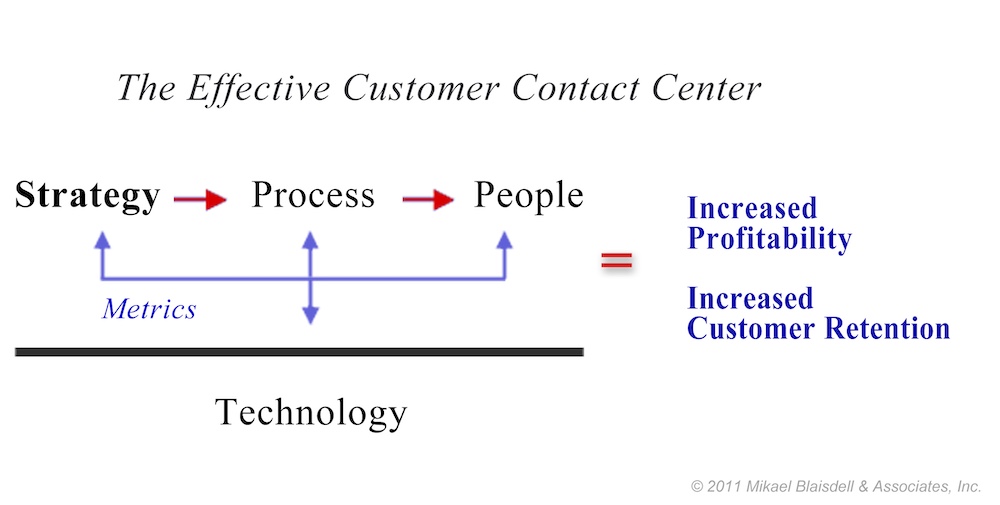

More and more in SaaS companies, the Customer Support department is part of the Customer Success org. Unfortunately, many Success execs have no Support experience themselves, and know little about the realities in the Support group — or how the mass of incoming support cases impacts their own Success team. This article describes the key aspects of Customer Support that every Customer Success executive should understand.
From the Beginning
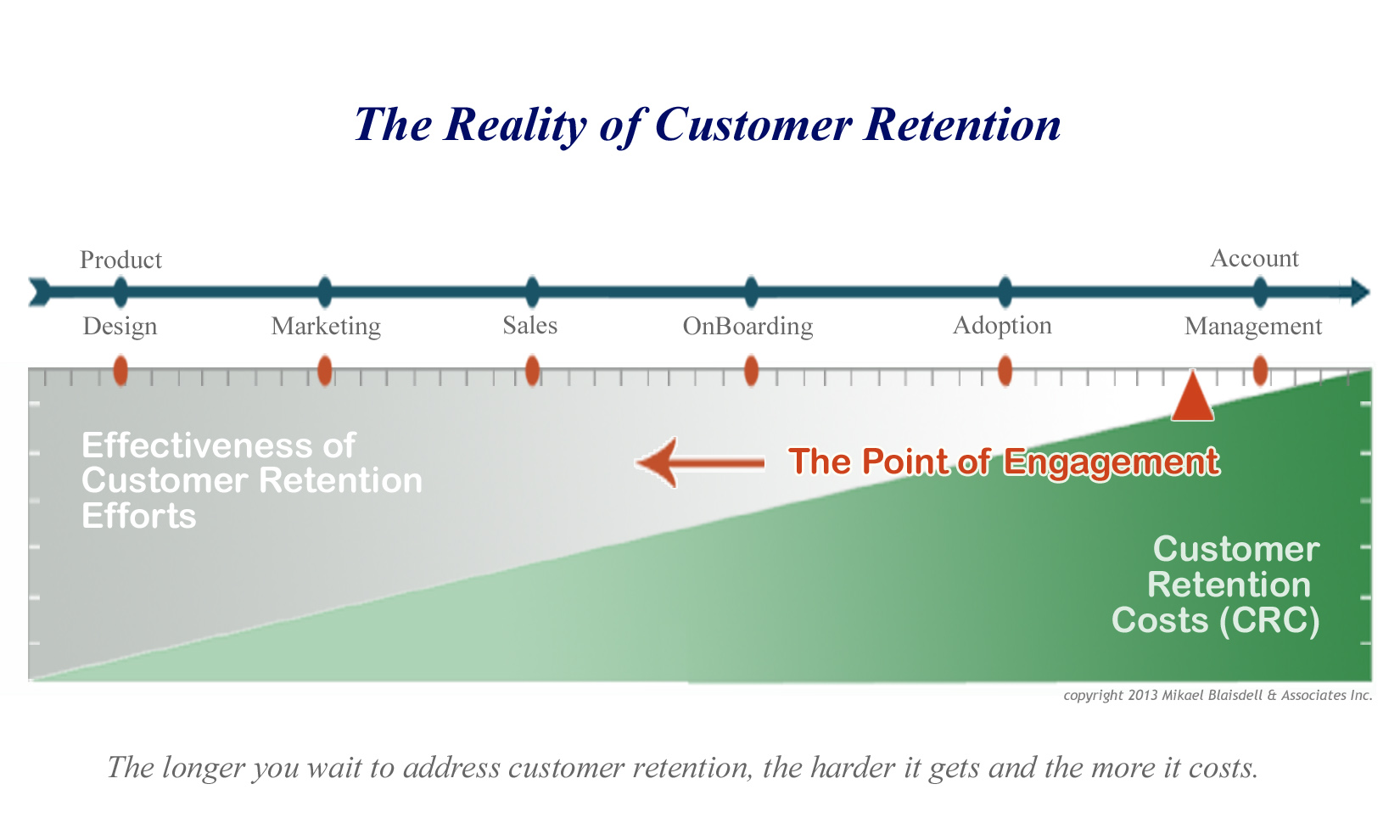
Let’s start with the bedrock foundation. Every powerful and complex software product necessarily requires that the user make an investment in learning to use the tool in order to gain the promised productivity and profitability benefits. That also means that every software company must effectively address that support burden if they want to prosper. The decision as to where to begin addressing the learning issue is a strategic one. If you do it at the product design phase, you’ll spend less and be much more effective. If you wait until the product is released, you’ll spend more and be less effective. You are going to spend money on Support — that’s not optional. The only choice you have is how much and where — and how effective you can be.
In the Customer Support group, there are some key strategic decisions to be made about the operation. Which channels are you going to offer for customers to contact you when they have problems? Phone, email, in-app filing of cases, social media apps? How fast do you have to respond to cases in order to keep your customers satisfied? What is covered under the definition of “Support” and what is not? How will you properly set the customers’ expectations about what they will receive? The answers to these and related questions are generally lumped under the heading of The Service Agreement, whether formal or otherwise, between you and your customers. Be aware that if you don’t provide the definitions, your customers will, leaving you to play catch-up forever.
The Staffing Equation
How many knowledgeable agents do you need to have on staff and available at 0900 Monday morning in order to meet your customers’ expectations? Your phone switch, email system, and support case management application has most of the data you’ll need to use in calculating this figure. The data points are Category, Impact/Severity, case Volume, Duration, Resolution/escalation rate, and Knowledge/expertise required. You’ll use your response time value in the staffing calculation along with volume and duration as shown below.
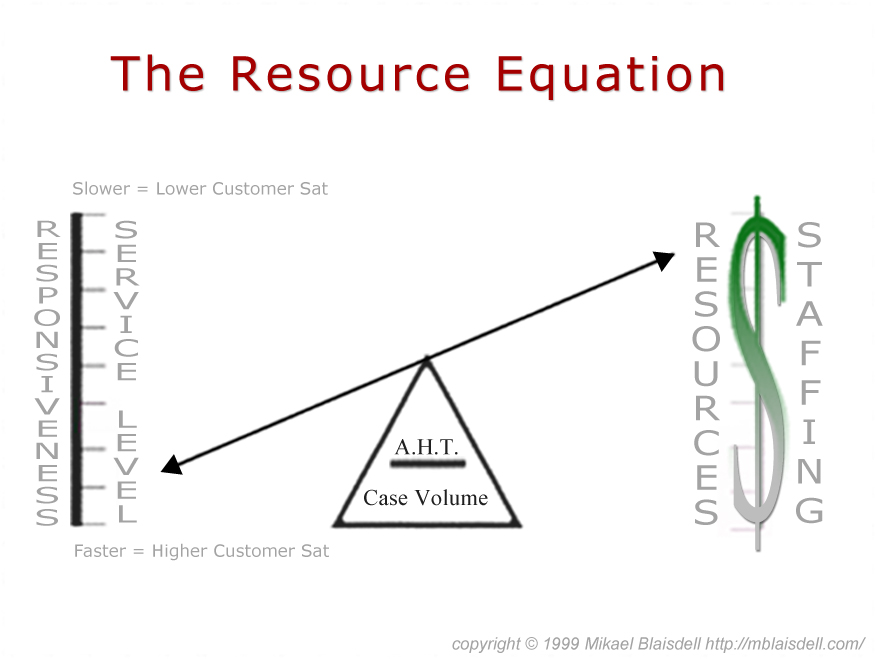
Here where analysis can start to get tricky. How many support cases are your Customer Success Managers handling? Those won’t appear in your support data because they’re not in either your phone switch, email system, or case management system. Don’t tell me that your CSMs never take support calls — you don’t know that — and I’m willing to guarantee you that it’s a significant number despite being largely invisible. Want to bet?
The large majority of those incoming Support cases are going to be in the Read The Manual category (A.K.A. RTFM). Another commonly used descriptor is Training Over The Phone. Support reps hate these calls because 1) They take longer than other types, and therefore screw up the staffing equation, 2) They are frustrating to have to deal with over and over. 3) There is no economic value in them for either the company or the customer. But these cases/calls are very important: if your Support team didn’t have to handle them, what else could they be doing with that time? How much money could you save? This is key data for you to use in developing your Customer Education strategy and budget. In the above equation, think about shrinking that central pivot triangle by diverting cases to automated resources — that in itself will reduce your costs and increase your responsiveness.
The Last Question
 At the end of each Support case, there is a final question that all Support reps should ask — and that you should pay careful attention to the answers. Was this case preventable? And, if so, how? What would the prevention cost? What did the case actually cost the company to handle and resolve?
Cost analysis is another vital issue that the senior Customer Success exec needs to understand. You can’t just divide the total burdened salary and resources costs by the average number of cases per month to arrive at a defensible cost per support case value — it’s much more complex than that. You need to consider training for your support team, and all of the myriad things that have to be done by the team members — meetings, admin, vacation, sick leave, etc., to arrive at an accurate cost per operational minute value that can then be used to calculate what categories of cases are costing you. Those figures need to be blessed by your CFO. It’s a lot of work, but it’s a vital foundation for a lot of critical decisions.
If You Really Want To Know
 I’ve done operational reviews of Support teams for over 25 years. In every one of them, I strongly recommended that members of the Senior Management team take regular shifts in the Support group. “You can take calls or cases directly yourselves, if you are competent to do so, or just listen in or observe, but you need to be there. Your presence sends a message that this is important work with the customers.” One of my clients’ CEOs came back to tell the rest of the CxO team that “you hear things on that hotline that you just don’t hear anywhere else!” Wise words, especially in the SaaS era.
What’s going on in your company’s Support group? What is the status of the relationship between your Support and Success teams? If you’re not sure, let’s talk. Schedule an Office Hours session today. Or, even better, complete The SaaS & Support Project research form as a basis for our conversation. Here’s the link:
https://www.customersuccessassociation.com/the-saas-support-project-2025-research-survey/