
Your company’s product is a value engine, and it needs to be managed as such so that both you and your customers can clearly see the benefits of its use. Putting the reporting burden on the customers to tell you about the value they’re getting leaves that relationship at-risk to the churn monster. As you start to prepare for your upcoming Customer Value Review with a major account, there are some core questions that should be asked. Do you know what your executive sponsor at that customer is doing with the features of your application? How about your champion? Power users? Critically, which actual jobs are being done more effectively via your app — and what are they really worth in dollars and sense to that customer? Which users are not using the application’s feature set, and what jobs are not being done? How much potential value is being left untapped? If you don’t have the data, you can’t do the science. If you can’t answer these questions, what does that say about the mission and role of your Customer Success group? The security of your job?
Customer Success Is Changing
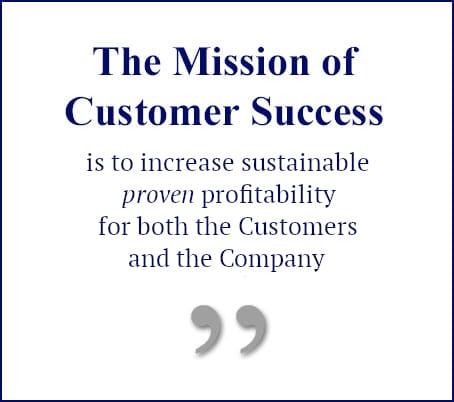
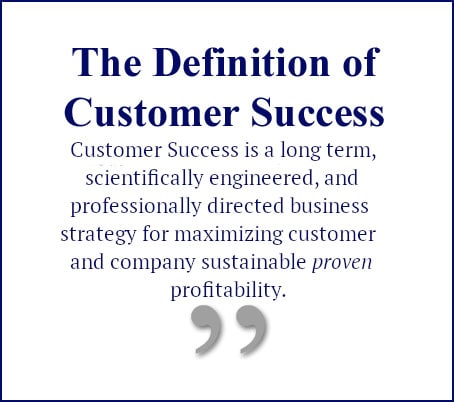
 There has been a lot of talk about how the profession of Customer Success is changing. The pursuit of AI is definitely having an effect, but the real change is being driven by something deeper. It’s no secret that CS groups are being given revenue responsibilities and being measured on their results. That shift has been long overdue, but tracking company revenue is only half of what needs to be done. What about the customer? Customer Realized Value is the road to your company’s future. What specific actions are you taking to track and to increase it?
Options and Decisions
 What are your options if you don’t have the data about Customer Realized Value? The first is to do nothing and watch while the risk of churn increases until the relationship ends. The second is to start bridging the gaps in your product’s design by bolting on tools that will begin to provide the data and insight that you need to authentically talk about value with your customers. The Customer Success Directory’s TechMap page has a list of all of the vendors that I have found whose apps enable specific application feature usage tracking. Knowing which features of your application’s set are being used — or not! — by a given customer, however, is only the beginning of what you will need for an outcome led growth strategy to become possible. You also need to know what real tasks are being accomplished by that usage and what those outcomes are worth to the customer. The tracker will also tell you what features are not being used.
Having the product usage data by itself isn’t going to get you very far. That data still has to be analyzed by someone who knows what it means — someone with both in-depth product knowledge and extensive domain expertise. If you don’t have such a person on your staff, look farther afield. If you get stuck, let’s talk.